

Introduction
You hear the numbers and they sound impossible. A single deal that pays more than most people earn in a month. A commission check that changes your year. High-ticket sales promises that kind of life. And it delivers, but only for a small group of people.
Here is the cold truth. According to recent sales data, only 28% of sales reps hit their annual quota in 2024 and 2025. That means 72% of reps failed to meet their goals.

The income potential is real, but most people never get there. Why? Because they work harder instead of working smarter. They guess what works instead of studying what actually closes.
That is where ticket citation changes everything.
What is Ticket Citation?
Here is the simple idea behind it. Every successful high-ticket deal leaves a trail. The words the closer used. The objection they handled. The exact moment the prospect said yes. Ticket citation is the practice of studying those successful deals and pulling out the patterns you can use yourself.
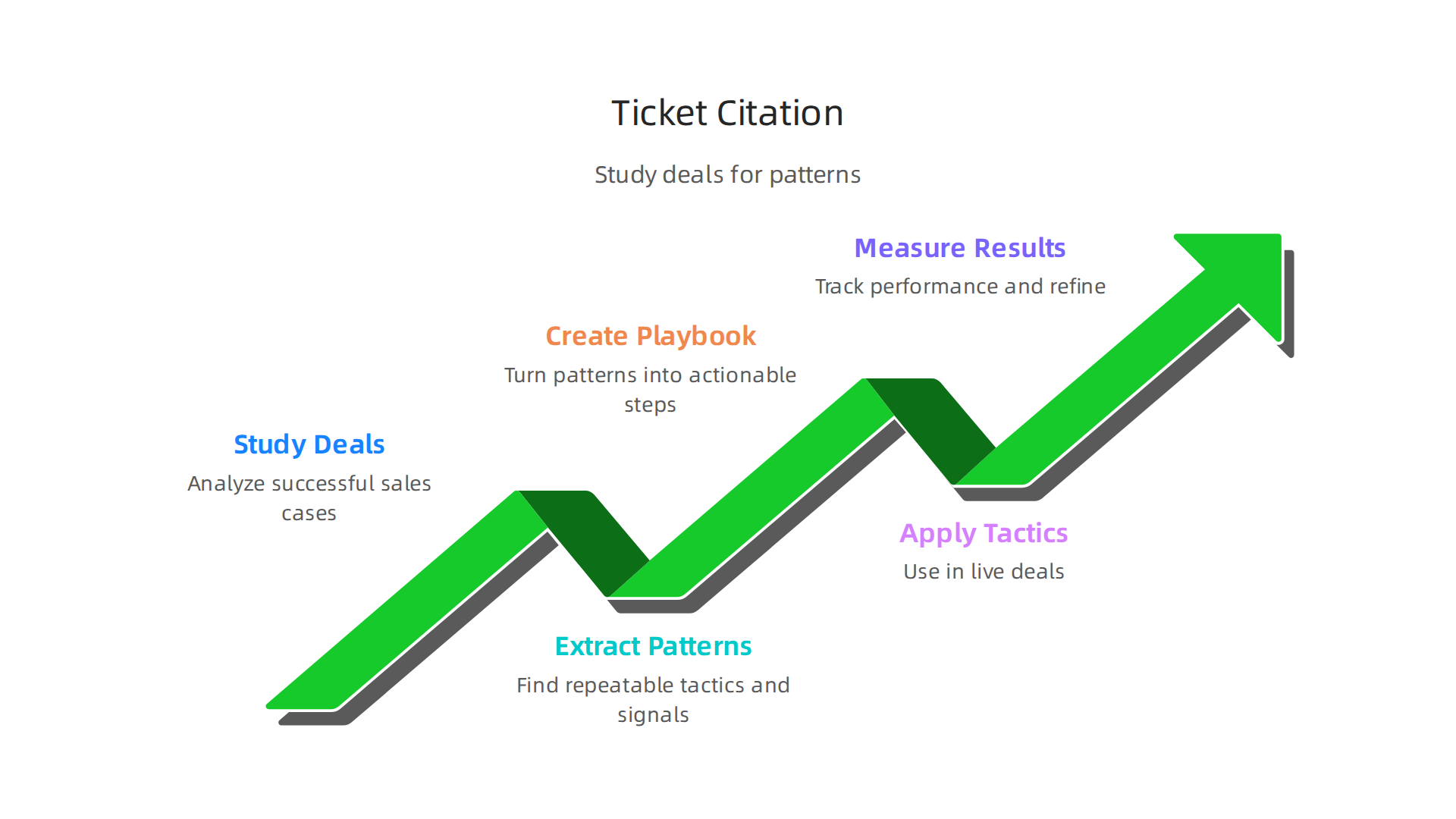
Think of it like being a detective. You look at the deals that worked, find the common threads, and build your own playbook from real proof.
This is not theory. This is learning from live wins.
If you want to master high-ticket sales in 2026, you cannot rely on generic advice. You need specific insights from actual closers. The difference between someone who makes six figures and someone who burns out often comes down to one thing. They know what to say and when to say it because they studied the ticket citation from deals that already worked.
Why Most High-Ticket Aspirants Fail
The numbers are brutal. A look at business success rates shows that many new ventures and careers fail within the first few years. In high-ticket sales, the failure rate is even worse. Why? Because most people jump in without a map. They take a sales job, listen to a basic training, and then hope they figure it out on the fly.
That is a recipe for disappointment.
Here is what usually happens. A new rep gets a lead. They fumble through the call. The prospect asks a tough question and the rep freezes. The deal falls apart. The rep gets discouraged. They quit before they ever gave themselves a real chance.
Now imagine the opposite. A rep who has studied a dozen successful ticket citations. They know exactly how to handle that tough question because they have seen it handled before. They know the exact phrasing that turned a maybe into a yes. That rep does not freeze. They close.
The difference is preparation. And ticket citation is the fastest way to get prepared.
What This Article Will Give You
This is not a motivational piece. This is a practical guide. You will get a step by step framework to gather real ticket citations, analyze them for patterns, and apply what you learn to your own calls.
By the end, you will know how to stop guessing and start closing with confidence.
If you are new to this world, you might want to first understand the bigger picture. Check out our complete guide on what high-ticket sales really means and whether it is right for you.
The Path Forward
High-ticket sales is not a secret club. It is a skill. Like any skill, you get better by studying the best. Ticket citation gives you direct access to what works. No fluff. No guessing. Just proven patterns from real closers.
Ready to learn the exact framework? Let us walk through it step by step.
What Is a Ticket Citation in High-Ticket Sales?
You already know the basic idea: study deals that worked and borrow their patterns. But let’s get more specific. A ticket citation is a recorded capture of a real high-ticket sales interaction. It includes the exact words the closer used, the prospect’s objection, the offer structure, and the moment the deal closed. Think of it as a replay of a winning play.
Here is why the definition matters. High-ticket sales deals start at $5,000 and go up from there, as explained in this guide from Apollo. The stakes are huge. One wrong sentence can kill a $10,000 commission. So you cannot rely on generic sales tips from a blog. Those tips are too broad. A ticket citation hands you the exact context of what worked in a real situation. It is specific to the product, the prospect, and the moment.
And here is the powerful part. Ticket citation is accumulative. Every recorded call adds to your knowledge bank. Over time, you build a personal library of proven patterns. You stop guessing and start matching situations to solutions.
For beginners and career switchers, this is a lifesaver. You do not have years of experience to draw from. So you borrow experience from others. You study their ticket citations to fill the gap. That is how you fast-track your learning curve. If you are just starting out, reading our complete guide on breaking into high-ticket sales will show you how to get your first real calls.
In 2026, the best closers do not rely on memory alone. They use a system of ticket citations to stay sharp. Every call becomes a lesson. Every deal adds to your edge. That is the core of the practice.
The Anatomy of a High-Ticket Sales Ticket
So what actually goes inside a ticket citation? Think of it like a baseball card for a sales deal. It captures all the stats that matter. When you log the right details, you turn one closing call into a lesson you can use forever.
Every high-ticket sales ticket should capture five key elements.
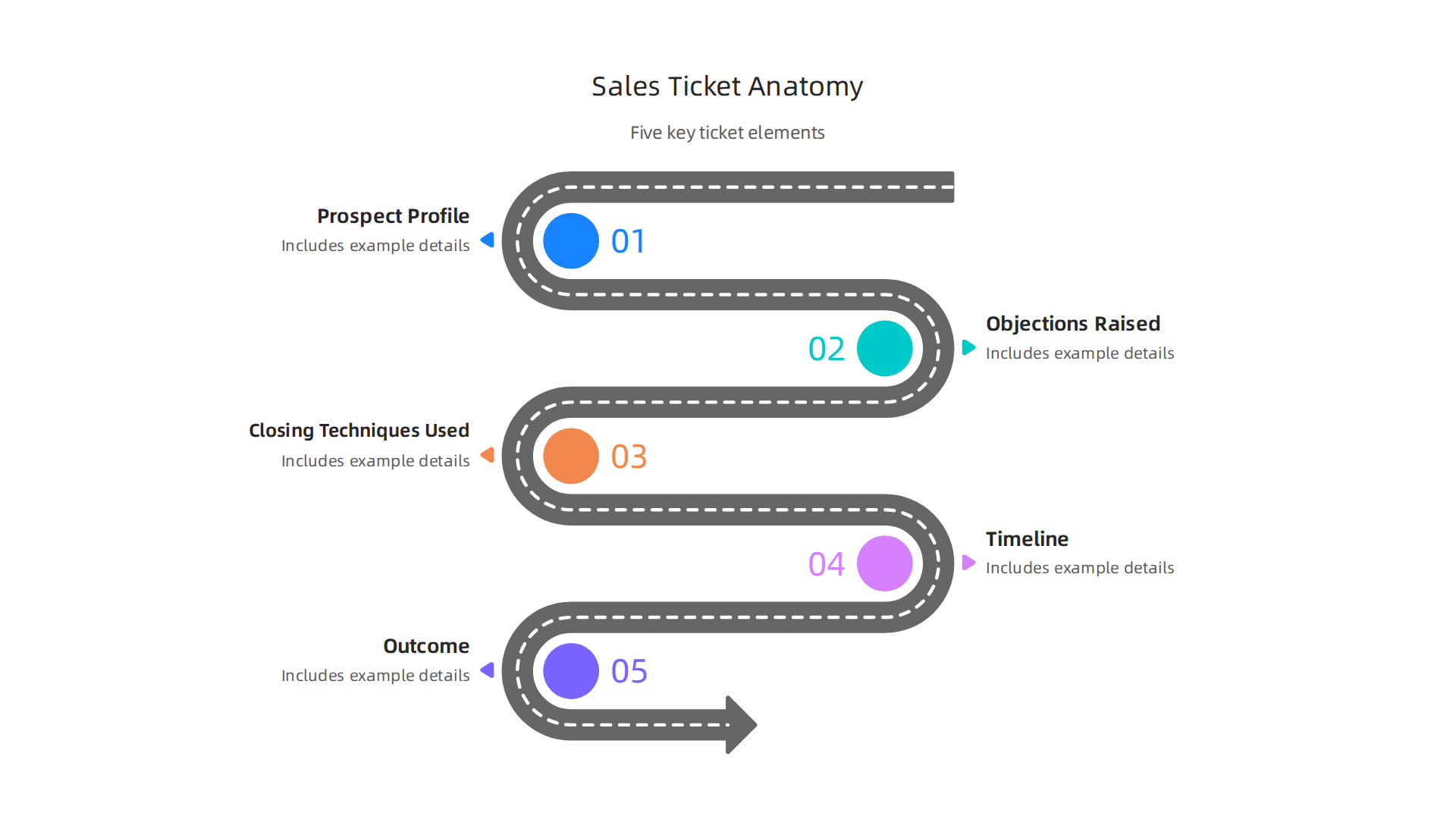
1. Prospect profile
Who was this person? Log their industry, company size, job title, and budget. Over time, you see clear patterns. For example, SaaS founders with smaller teams might close faster than enterprise buyers. A good CRM helps you organize these profiles so you can spot trends. Using a tool like Breakcold makes this part easy.
2. Objections raised
Write down exactly what stopped them. Was it price? Timing? Trust? Most high-ticket objections sound the same, but the real reason changes. Logging them helps you prepare better responses.
3. Closing techniques used
What specific technique did the closer use? Assumptive close? Value stacking? Ben Franklin? If you struggle with pricing objections, our guide on high-ticket pricing strategy that doubles your close rate covers the exact scripts that work.
4. Timeline
How long did the deal take? First contact to signed contract. Short timelines mean high urgency. Long timelines mean the prospect needed more education. Tracking this helps you speed up future deals. According to Cometly, knowing where deals get stuck is the first step to fixing your funnel.
5. Outcome
Did you win or lose? How much revenue did the deal generate? Even losses are valuable because they tell you what did not work.
Here is a simple example of a ticket citation log in practice:
| Element | Detail |
|---|---|
| Prospect profile | SaaS founder, 50 employees, $50k budget |
| Objections raised | "It is too expensive right now" |
| Technique used | Value stacking + ROI calculator |
| Timeline | 14 days from first call to close |
| Outcome | Closed at $12k |
That tiny log holds more power than a hundred generic sales tips. It is real. It is specific. And it works.
If you are new to high-ticket sales and want to start building your own library of ticket citations, check out our complete guide on how to break into high-ticket sales. It shows you exactly how to get your first calls and start logging your own wins.
Why Ticket Citation Insights Matter for Your Career Growth
Okay, you have seen the table. You know what goes into a ticket citation. But why should you actually care? Here is the thing. Most sales reps never track their calls at all. They just move on to the next prospect. That is a huge missed opportunity.
When you build a habit of logging ticket citations, you unlock three big career advantages.
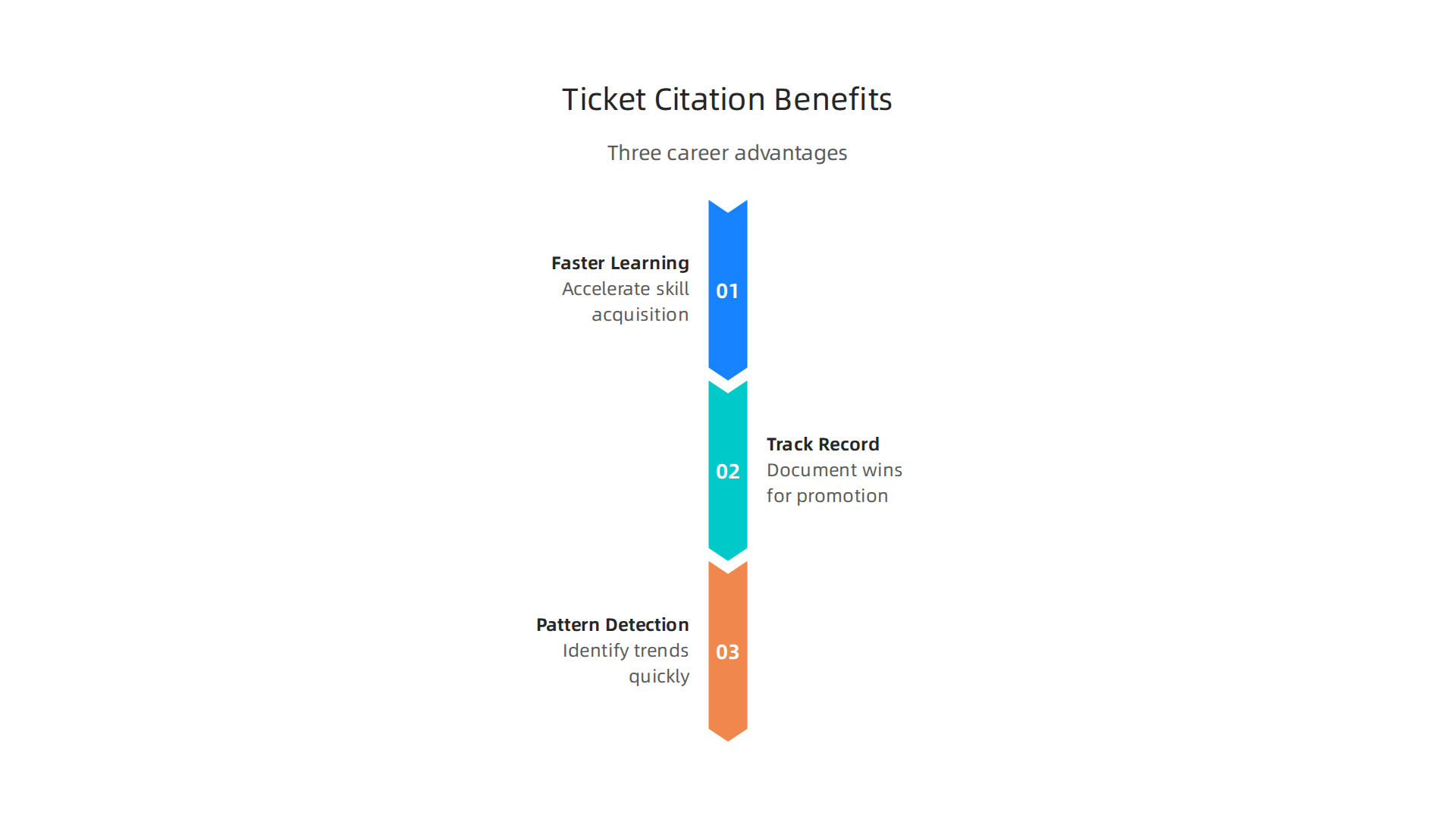
First, you speed up your learning. Every call becomes a lesson. You can look back and see exactly what you said when a prospect pushed back on price. You can see which closing technique worked best. Instead of guessing, you are learning from real data. Consider this: only 28% of sales reps hit quota in 2024 and 2025, according to recent research on outbound sales performance. The reps who track and learn from their calls are the ones who rise above that number.
Second, you build a track record you can actually show. When you apply for a high-ticket sales job, saying "I am good at sales" means nothing. But showing a log of past deals with specific outcomes? That proves you know what you are doing. Employers in 2026 want proof. As someone in the industry noted in the Top Sales Trends for 2026, failing to connect the dots between different stakeholders is a common failure mode. Your ticket citation log shows you connect those dots every time.
Third, you spot patterns faster. After a few dozen log entries, you start to notice trends. Maybe you see that prospects asking about NYC ticket pay always raise the same objection. Or that Chicago ticket payment deals close faster when you use a specific value stack. Or that DC ticket payment prospects need more education before they feel comfortable. These insights help you handle the next call smarter.
A strong ticket citation library transforms you from a rep who just chases deals into a professional who truly understands their market. That is the kind of person who gets promoted and earns more.
If you want to start building your own ticket citation library and land a role where this skill pays off, check out our guide on how to find high-ticket sales jobs. It shows you how to spot the legit opportunities and present your skills, including your new ticket citation system, to stand out.
How to Find and Analyze High-Ticket Sales Tickets
So you know why ticket citations matter. Now you need to know where to find them and how to break them down. The good news is you do not need a fancy software tool or a special database. Your raw material is already all around you.
Where to find high-ticket sales tickets.
You have three main sources:
- Your own recorded calls or detailed notes. Every live conversation with a prospect holds gold. Even the failed deals. Actually, especially the failed deals. They show you exactly where things went wrong.
- Role-plays and training transcripts. If your company uses a training platform or recorded practice sessions, use them. Many high ticket sales training programs provide call recordings or mock deal transcripts for review.
- Shared case studies from your team or mentors. Other reps have already cracked the code on certain objections. When they share a success story, treat it like a free ticket citation. Learn from their exact words.
How to analyze a ticket citation step by step.
Once you have a ticket citation in front of you, follow this simple framework.


First, listen or read the whole thing without stopping. Get the full story.
Second, tag every objection you hear. Write down the exact way the prospect raised it. For example, a prospect might say, "I am not sure about NYC ticket pay because I do not see the value." Or "Chicago ticket payment terms are too tight for my budget." Or "DC ticket payment clients always back out at the last minute." Tagging objections helps you spot the most common blockers in your market.
Third, note the turning points. What happened right before the prospect said yes? Or right before they said no? These moments are your biggest clues. As the Prospeo playbook points out, identifying the exact moment a buyer shifts is the key to replicating success.
Fourth, extract the scripting. Take the exact sentences or phrases that worked and save them. Field-tested sales call scripts show that reps who write down and reuse their best responses close more deals.
Use your ticket citations to build a personal playbook.
This is where the magic happens. After you analyze five or ten ticket citations, you will start to see patterns. You will know the top three objections for NYC ticket pay deals. You will know which response works best for Chicago ticket payment negotiations. You will have a go-to script for DC ticket payment follow-ups.
Organize these findings in a simple document or a sales dashboard template if you want to get fancy. Bring together your best responses under each objection. Now you have a playbook that is built from real data. Not theory. Not guesswork. Real wins and real failures.
That playbook makes you faster and more confident on every call.
If you are just getting started in this space, check out our complete guide on how to break into high-ticket sales. It gives you the full roadmap to building skills like this from scratch.
Skills You Need to Cite and Close High-Ticket Deals
Finding and analyzing a ticket citation is one thing. Using it to actually close the deal is another. That takes a specific set of skills. And the good news is you can learn every single one of them.
Think of this like cooking. Having a recipe (your ticket citation) is great. But you still need to know how to chop, season, and control the heat. These are the core skills you need to turn your raw citations into closed deals.
Active Listening to Capture Key Ticket Details
This is the foundation skill. It sounds simple, but it is not. Active listening means you are not just waiting for your turn to talk. You are fully focused on what the prospect is saying and how they are saying it.
When a prospect mentions "nyc ticket pay" struggles, you listen for the emotion behind the words. Are they frustrated? Skeptical? Worried about cash flow? As the guide to becoming a high ticket closer points out, active listening is one of the top skills you must master. Without it, you miss the subtle cues that make a ticket citation valuable.
During a call, take brief notes. Write down exact phrases. "The client said Chicago ticket payment terms are too tight." That is raw ticket citation material. Capture it while it is fresh. Then use it later.
Pattern Recognition to Link Objections to Closing Techniques
Once you have listened to many calls, you will start to see patterns. You will notice that "DC ticket payment" objections often come up right before a prospect asks about pricing. You will see that "nyc ticket pay" concerns usually surface when a prospect feels they are taking a big risk.
This is pattern recognition. It lets you predict what is coming next. And when you can predict the objection, you can prepare the response ahead of time.
The high ticket sales jobs overview explains that these roles demand advanced skills in persuasion and relationship management. Pattern recognition is part of that. It turns a random objection into a predictable moment you can handle with confidence.
Every time you hear a "Chicago ticket payment" concern, for example, you already know which closing technique works best. That is the power of pattern recognition.
Scripting and Customization Based on Cited Insights
This is where you put it all together. You have the raw ticket citation from active listening. You have the pattern from your analysis. Now you build a scripted response that is customized for that specific deal.
But your script is not generic. It is pulled directly from what worked before. You saw that when a prospect said "nyc ticket pay" is too complicated, the winning response was to break it down into three simple steps. So you use that exact structure again.
The Indeed guide on sales skills highlights that strong communication skills help reps build rapport and persuade effectively. Scripting based on real citations makes your communication stronger because it is proven. It has already worked.
Here is how you bring it together in practice:
- Active listening gives you the raw objection: "I am not sure about DC ticket payment timelines."
- Pattern recognition tells you this objection usually leads to a pricing conversation.
- Custom scripting lets you respond with the exact language that worked for that same objection in five previous deals.
Stay Organized with Tools
You also need a system to track all your ticket citations. Use a CRM or a simple spreadsheet. The TDSynnex guide to sales skills mentions that CRM proficiency helps professionals stay organized and manage opportunities more effectively. When you have dozens of ticket citations saved, you can search for "Chicago ticket payment" and instantly see every time that objection came up and how you handled it.
That saves you time and makes your calls more consistent.
Practice These Skills Every Day
You will not master all three skills overnight. That is fine. Pick one and focus on it for a week. Maybe this week you focus only on active listening. Take notes on every call. Next week, review your notes and look for patterns. The week after, build custom scripts from what you found.
If you are just getting started in this space and want a complete roadmap from the beginning, check out our guide on how to break into high-ticket sales. It walks you through every step of building these skills from scratch.
The more you practice these three skills, the faster you will move from finding a ticket citation to closing the deal. And that is where the real money is made.
Avoiding Scams: Citing Reputable Training and Opportunities
You have the skills to listen, spot patterns, and build custom scripts. But here is a hard truth: not every training program or job offer out there is real. In fact, the high ticket sales space has more than its fair share of scams. The good news? Your ticket citation skills can help you separate the legit opportunities from the traps.
Think about it this way. You would not buy a car without checking the mileage and service history. So why would you invest time or money in a training program that refuses to share real ticket data?
How Ticket Citation Exposes Empty Promises
A scam program loves to say things like "Our students make $10k in their first week." But when you ask for the ticket citation behind that claim, they get quiet.
Real programs have real data. They can show you actual deals. They can tell you things like "Our top closer in December closed 12 deals with an average chicago ticket payment of $5,000." That is a specific, verifiable claim. A scam gives you hype without numbers.
The Activated Scale guide to high ticket sales scams explains that one of the biggest red flags is when a program promises guaranteed income without showing you how. That is where your citation mindset kicks in.
Legitimate coaches and course creators track their results. They can point to real conversations, real objections, and real close rates. And they are happy to share those details because it builds trust.
Red Flags You Can Spot Using Ticket Citation
Here are three warning signs that a training or job offer is probably not legit:
- No transparent ticket data. If they cannot give you a single example of a specific deal they closed, run. No data means no proof.
- Overpromising results. "Make $20k in your first month" is a common line. But the FTC consumer alert on business opportunity scams warns that these claims are often just bait. Real income takes work and time.
- One size fits all scripts. If they sell you a single script and say it works for every prospect, that is a red flag. Real high ticket sales require customization based on the specific nyc ticket pay or dc ticket payment situation the prospect is in.
Build Your Own Citation Based Vetting Process
The best way to protect yourself is to use the exact same skills you use with prospects. When you look at a job offer or a training program, ask for proof.
Start by asking these three questions:
- Can you show me one complete ticket citation from start to finish?
- What was the average chicago ticket payment or nyc ticket pay amount your last 10 students closed?
- Can I talk to three people who finished your program and are actively closing deals?
If they dodge or give vague answers, walk away. A real program will welcome your questions. They know their numbers, and they are proud of them.
If you are new to this space and want to learn how to spot the right opportunities from the start, check out our guide on how to find high ticket sales jobs and spot legit roles. It walks you through exactly what to look for in a job posting and what to avoid.
Also keep in mind that the AARP fraud watch for 2026 lists business and job scams as one of the biggest threats this year. So your guard needs to be up.
The Bottom Line
Your ticket citation skills are not just for closing deals. They are for protecting your career. Every time you hear a big promise, ask for the data. If the data is there, you have a real opportunity. If the data is missing, you have a scam. Use your skills to choose wisely.
Remote High-Ticket Sales: Citing the Best Work-from-Home Roles
So you have dodged the scams. Now the real fun begins. Finding a legit remote high-ticket sales role that actually pays well. The good news? The market is full of real options. As of early 2026, sites like Indeed list over 1,100 remote high-ticket sales jobs in fields like tech, admin, and customer success. But not every listing is a goldmine. You need your ticket citation skills to find the best ones.
What to Look for in a Remote Role
A good remote company does not hide how they operate. They tell you up front what tools you will use, how they train you, and what the pay structure looks like. Here is what to check before you apply:
- Supported tools. Do they give you a CRM, a dialer, and a script library? If the answer is no, that is a red flag. You cannot close high-ticket deals without the right tools.
- Training paths. Look for companies that offer real onboarding. A solid program will show you how they handle different nyc ticket pay rates or chicago ticket payment structures. If they just throw you on the phones, walk away.
- Transparency about pay. Legit roles are clear about base salary, commission splits, and average close rates. They will share a ticket citation or two as proof.
Industries That Thrive Remote
Not all high-ticket sales industries are remote friendly. But three stand out in 2026:
- SaaS (Software as a Service). Most SaaS companies are fully remote or hybrid. They sell subscriptions worth thousands of dollars per year. And they love closers who can cite real deal data.
- Coaching and consulting. High-end coaches sell programs for $5k, $10k, or more. They often hire remote closers to handle the sales calls. Your ability to use ticket citation logic works perfectly here.
- Finance and investment services. Selling financial products remotely is huge right now. Companies want closers who understand dc ticket payment amounts and other specific numbers.
More than 750 remote high-ticket sales jobs are open on Glassdoor right now. And platforms like Upwork show nearly 1,500 freelance closing gigs. The demand is real.
Use Your Own Ticket Citation Logs as a Portfolio
Here is a trick most job seekers miss. When you interview for a remote role, do not just talk about your skills. Show them. Build a simple log of your own ticket citation examples.
Write down things like:
- "I closed a deal worth $4,500 using a customized script tailored to the prospect’s budget."
- "I handled an objection about chicago ticket payment limits and turned it into a signed contract."
- "I tracked my close rate over 30 days and improved it by 15%."
That kind of proof beats a fancy resume every time. It shows you understand the numbers behind the sale.
If you are still figuring out what kind of role fits you best, read our guide on what high-ticket sales actually involves. It breaks down the different roles and what they pay.
The remote market is wide open in 2026. Use your citation skills to pick the right door. Then walk through it.
Building Confidence: Citing Your Own Wins
You found the right remote role. Now comes a different kind of challenge. The voice in your head that whispers, "Do I really belong here?"
Here is the truth. Almost every high-ticket closer deals with imposter syndrome at some point. You feel like you are faking it. You worry someone will find out you are not as good as you seem.
But here is a simple trick. Stop relying on your feelings. Start relying on your data.
Every deal you close is a ticket citation. It is proof that you can do the job. When you write down those wins, the doubt fades away.

You see the numbers instead of the nerves.
Build a Personal Win Bank
Think of this as your highlight reel. A place where you store every closed deal, every tough objection you handled, and every big commission check you earned.
Keep a simple document. Write down things like:
- "Closed a $5,000 deal by addressing the prospect’s fear about chicago ticket payment limits."
- "Turned a cold lead into a signed contract by referencing their specific dc ticket payment history."
- "Improved my close rate by 12% in one month by using a customized script."
That is your ammunition. Before a tough sales call, open that document. Read three wins. Your brain shifts from "I cannot do this" to "I have done this before."
According to a guide on tracking sales activity with KPIs and templates, logging your wins helps you spot patterns and improve faster. It is not just about confidence. It is about getting better.
Use Your Data to Own the Room
When you walk into a negotiation with a proven ticket citation record, you carry real power. You are not guessing. You know what works.
A log of your own closed deals also helps you answer interview questions with facts. Instead of saying "I am good at closing," you say "I closed three deals worth $12,000 last month alone."
The difference is huge.
If you want to dive deeper into building this kind of confidence from the ground up, read our guide on breaking into high-ticket sales. It covers the exact mindset shifts that top closers use.
Your wins are real. Write them down. Use them as fuel. That is the real power of a ticket citation. It turns doubt into proof.
Summary
This article explains ticket citation: a practical method of studying real high-ticket sales deals to copy what actually closes. It defines a ticket citation, breaks down the five essential elements to log (prospect profile, objections, closing technique, timeline, outcome), and gives a step‑by‑step framework for finding, analyzing, and cataloging winning calls. You’ll learn how to turn those logs into a personal playbook, build core skills like active listening and pattern recognition, and create reusable scripts tailored to your market. The guide also shows how to use citations to vet training programs and remote job offers so you avoid scams, and how to present citation-based proof when applying for roles. By following this system you speed up learning, improve close rates, and build a confidence bank of verifiable wins you can use in interviews and negotiations.